
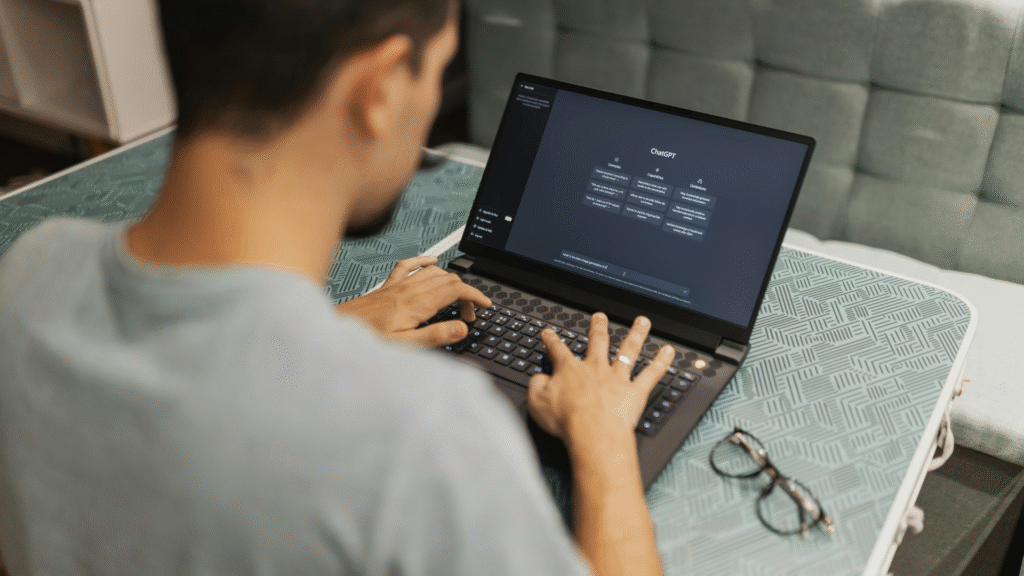
AI isn’t some futuristic concept anymore—it’s already threaded into the way we live, work, and think without most people even noticing. Every time you ask ChatGPT to draft a message, brainstorm an idea, or explain something faster than Google ever could, you’re tapping into a shift bigger than the internet boom. The difference now is speed and scale. What used to take hours of research or trial and error can be compressed into seconds, and the cost of experimentation has practically hit zero. That’s why creators are making more content, businesses are automating entire workflows, and students are rethinking how they learn. AI isn’t just a tool; it’s becoming a co-pilot that learns your patterns, adapts to your style, and plugs itself into your daily rhythm.
The professional world is already feeling the shakeup. Marketing teams are leaning on AI for campaign ideas, data analysis, and even ad copy that rivals human creatives. Coders are using GPT-driven tools to write, debug, and optimize code with efficiency that feels almost unfair. Designers are generating mockups in minutes, saving time that used to be burned on revisions. The speed of execution has flipped the power dynamic—now it’s not about who has the biggest team but who knows how to use AI the smartest way. And that democratization is exactly why small businesses and solo entrepreneurs are competing with big players in ways we didn’t see before.
But the part that really matters isn’t the tools themselves, it’s how fast they evolve. Just when you think you’ve figured out a rhythm with one AI platform, a new update drops that changes the game again. GPTs are getting more context-aware, more multimodal, more aligned with human communication, and the gap between “human output” and “machine output” is shrinking to near invisibility. It’s not hard to imagine a near future where we don’t even label it as AI—we’ll just accept it as the invisible operating system running in the background of everything we do.
The people who win in this transition won’t be the ones waiting for a perfect manual. They’ll be the ones experimenting right now, treating AI like a sandbox instead of a scary black box. Because the truth is, AI isn’t coming for your job; someone using AI smarter than you is. And the sooner you understand that this isn’t just hype but the baseline for how work and life will function, the sooner you can build your own unfair advantage.