
Not long ago, the idea of a car driving itself seemed like pure science fiction — something reserved for Hollywood blockbusters and optimistic tech demos. Today, self-driving vehicles are navigating real streets, hauling freight across highways, and quietly reshaping how we think about transportation. But for all the progress made, autonomous vehicles (AVs) still sit at a fascinating crossroads: the technology is maturing rapidly, yet widespread adoption remains just out of reach. So what exactly comes next?
This article breaks down the current state of autonomous vehicle technology, the breakthroughs on the horizon, the challenges that still need solving, and what the next decade might realistically look like for self-driving cars.
Where Autonomous Vehicle Technology Stands Today
To understand where AVs are headed, it helps to understand where they actually are right now. The Society of Automotive Engineers (SAE) defines six levels of driving automation, ranging from Level 0 (no automation) to Level 5 (full automation with no human input needed under any conditions).
Most consumer vehicles on the road today operate at Level 2 — partial automation that includes features like adaptive cruise control and lane-centering assist. Tesla’s Autopilot and General Motors’ Super Cruise fall into this category. A human driver must remain alert and ready to take control at any moment.
True breakthroughs have been happening at Level 4, where vehicles can handle all driving tasks within specific geographic zones or conditions without human intervention. Waymo’s robotaxi service in Phoenix and San Francisco is the most prominent example — fully driverless rides available to the public, right now. Cruise (before its regulatory setbacks) had a similar operation, and companies like Zoox, Motional, and WeRide are pushing into this territory globally.
Level 5 — the fully autonomous vehicle capable of handling any road, anywhere, in any conditions — remains an engineering challenge that no company has commercially deployed. It’s the destination everyone is working toward, but the road there is longer than many early predictions suggested.
The Technologies Driving the Next Wave of AVs
Smarter Sensor Fusion
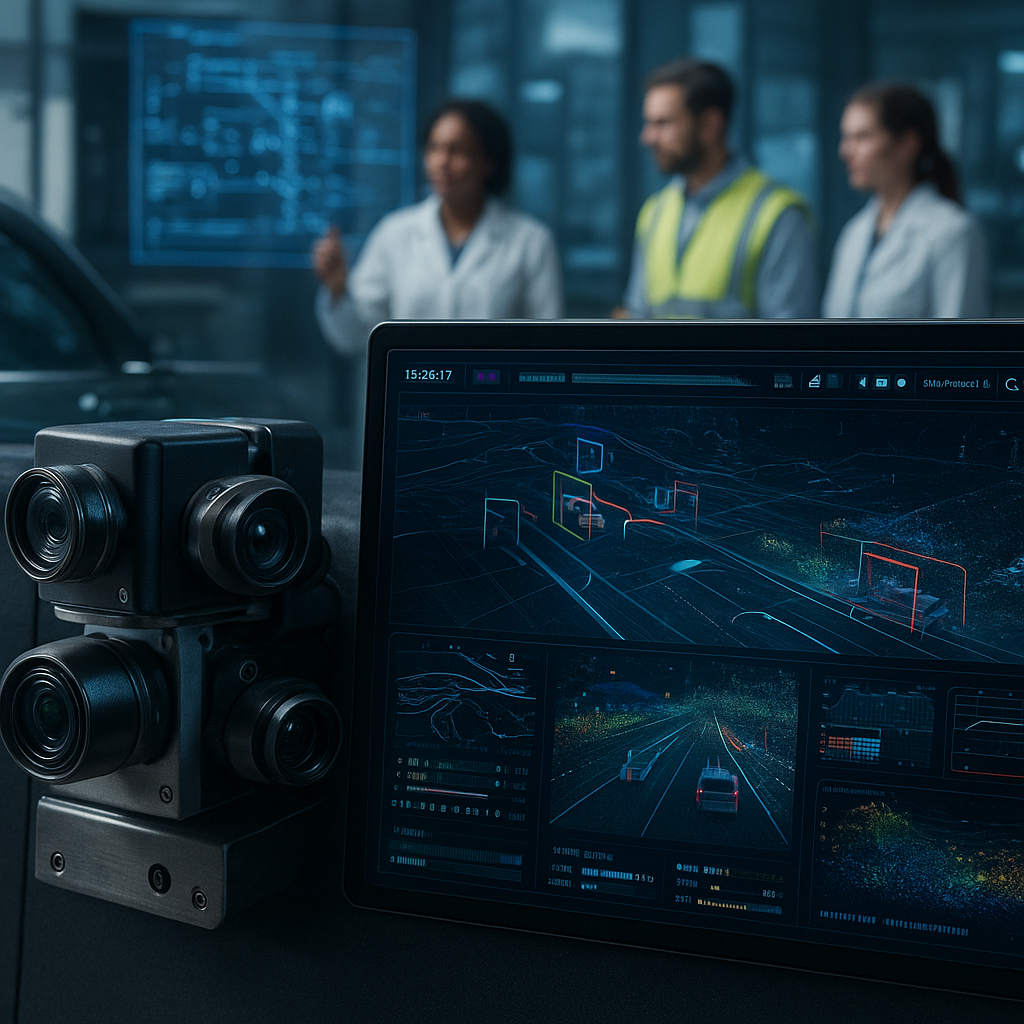
Current autonomous vehicles rely on a combination of cameras, radar, and lidar to perceive the world around them. Each has strengths: cameras capture visual detail, radar works in poor weather, and lidar produces precise 3D maps of the environment. The challenge has always been fusing these inputs into a reliable, real-time picture of reality.
Next-generation sensor fusion is getting dramatically better. Solid-state lidar — smaller, cheaper, and more durable than traditional spinning lidar units — is moving from prototype to production. Companies like Luminar and Innoviz are supplying lidar systems to automakers at scale, and the cost per unit has dropped from tens of thousands of dollars to under a thousand in some configurations. As these costs continue to fall, deploying high-quality sensor arrays across consumer vehicle lines becomes economically viable.
AI and Machine Learning Advancements
The “brain” of an autonomous vehicle — its software stack — is arguably more important than its sensors. This is where artificial intelligence, and specifically deep learning, is making the most dramatic strides.
Modern AV systems are trained on billions of miles of real-world and simulated driving data. They learn to recognize pedestrians in poor lighting, anticipate the behavior of cyclists weaving through traffic, and predict what a delivery truck double-parked ahead is likely to do next. Transformer-based neural networks, the same architecture powering large language models, are increasingly being applied to driving perception and decision-making — with impressive early results.
Tesla’s approach relies almost entirely on camera-based vision processed through custom AI chips, arguing that human drivers navigate with eyes alone and AVs should too. Waymo and others maintain that cameras alone are insufficient and that lidar is essential for safety. This philosophical divide is shaping two distinct technology trajectories, and the market will ultimately determine which proves more robust.
Vehicle-to-Everything (V2X) Communication
One underappreciated piece of the autonomous future is V2X technology — the ability of vehicles to communicate not just with each other but with traffic infrastructure like signals, pedestrian crossings, and road sensors. A car that can “see” a red light through a building, or receive a warning that emergency vehicles are approaching from two blocks away, is fundamentally safer than one relying only on its own sensors.
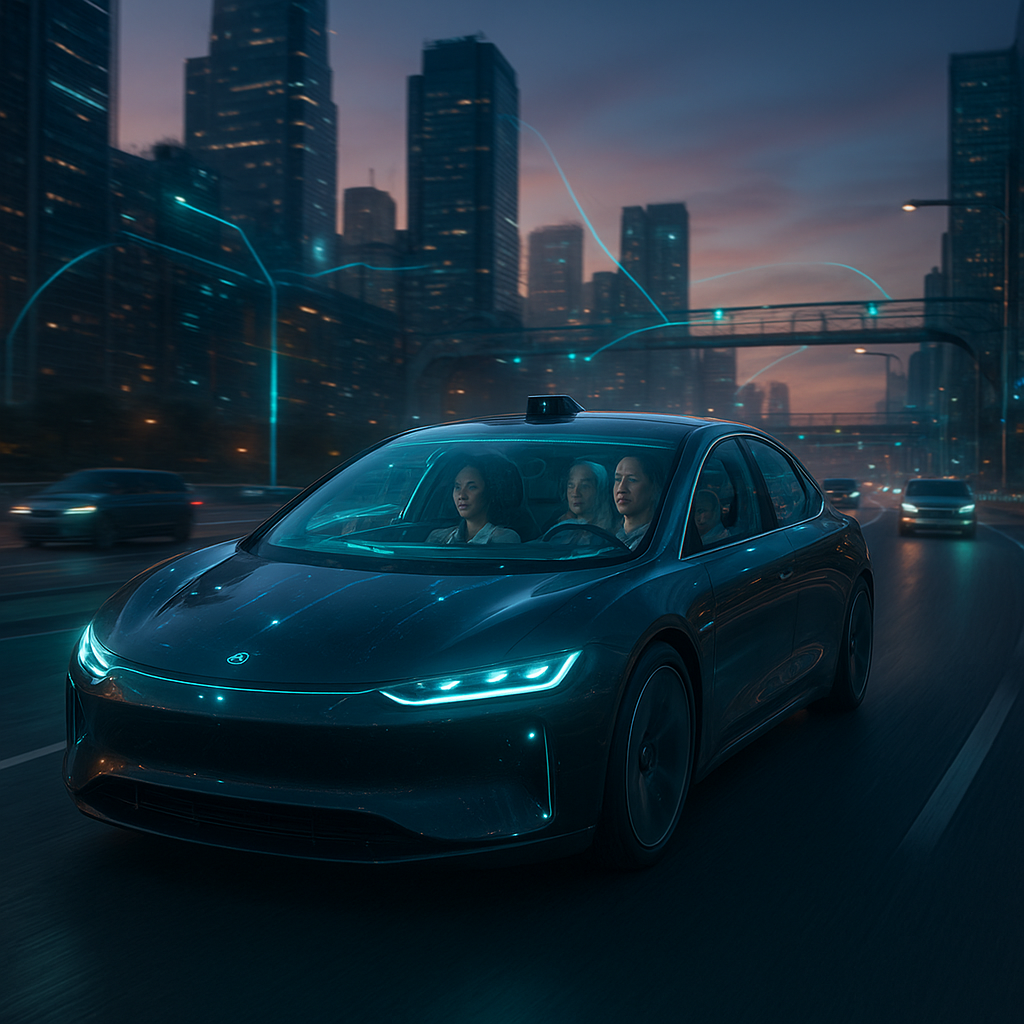
The rollout of 5G networks is accelerating V2X deployment by enabling ultra-low-latency communication between vehicles and infrastructure. Cities like Las Vegas and Singapore are already piloting connected infrastructure programs, and the European Union has mandated V2X readiness in new roadside infrastructure investments.
What Are the Biggest Remaining Challenges?
Despite extraordinary progress, several significant barriers stand between today’s AV technology and a world where self-driving cars are as common as smartphones.
The “Long Tail” Problem
AV systems perform remarkably well in familiar, well-mapped environments under normal conditions. The problem is the enormous variety of edge cases — situations that are rare individually but collectively happen all the time. A mattress falling off a truck. A child chasing a ball into the street. Unusual hand signals from a construction worker. Flooding that obscures lane markings.
Training AI systems to handle every conceivable scenario requires vast amounts of data and sophisticated simulation. This “long tail” of rare events is the primary reason full Level 5 autonomy is so difficult. Companies like Waymo process millions of simulated miles for every real mile driven, specifically to expose their systems to these low-probability, high-stakes moments.
Regulatory and Legal Frameworks
Technology tends to move faster than legislation, and autonomous vehicles are no exception. In the United States, AV regulations vary dramatically by state. California has one of the more developed frameworks, but nationally, there’s no unified federal standard for deploying fully driverless vehicles on public roads.
Questions of liability are equally complex. When a self-driving car is involved in an accident, who is responsible — the vehicle owner, the software developer, the manufacturer? These legal ambiguities slow commercial deployment and affect insurance structures across the industry.
Internationally, the picture is similarly fragmented. China has invested heavily in AV infrastructure and regulation, with companies like Baidu’s Apollo running driverless taxis in multiple cities. The EU is developing harmonized standards, but cross-border regulatory alignment remains a work in progress.
Public Trust and Acceptance
High-profile incidents involving autonomous or semi-autonomous vehicles have made a segment of the public deeply skeptical. A 2023 AAA survey found that 68% of Americans reported feeling afraid to ride in a fully self-driving vehicle. Building trust requires not just safe technology, but transparent communication about how these systems work and what their limitations are.
Interestingly, younger generations tend to be more open to AV technology, and familiarity breeds comfort — people who have already experienced Level 2 systems in their own vehicles express higher willingness to try higher levels of automation. This suggests public acceptance will grow organically alongside incremental adoption.
Commercial Applications Leading the Way
While consumer AVs face the most scrutiny, commercial applications are advancing with fewer constraints and clearer economic incentives. Autonomous trucking, for example, has a compelling business case: it addresses severe driver shortages, reduces labor costs, and can operate on predictable highway routes where the driving environment is comparatively controlled.
Companies like Aurora Innovation and Torc Robotics are already running commercial autonomous trucking pilots with safety drivers aboard. Aurora’s plans to launch driverless commercial freight operations represent one of the most significant near-term milestones in the industry. The American Trucking Associations estimates a shortage of over 80,000 drivers in the US, a gap autonomous systems are uniquely positioned to help fill.
Autonomous delivery robots and last-mile vehicles are similarly thriving. Nuro’s low-speed delivery vehicles operate in multiple US cities, while sidewalk delivery bots from companies like Starship Technologies have completed millions of deliveries on college campuses and urban neighborhoods worldwide.
The Role of Tesla and Major Automakers
No conversation about the future of autonomous vehicles is complete without addressing Tesla. Elon Musk has been famously bullish — and repeatedly optimistic ahead of schedule — about Tesla’s Full Self-Driving (FSD) capabilities. Tesla’s approach, using a neural network trained on massive camera data from its global fleet, is genuinely innovative, even if its timeline predictions have drawn criticism.
The launch of Tesla’s Cybercab robotaxi concept represents the company’s clearest bet on a fully autonomous future. Meanwhile, traditional automakers aren’t standing still. GM’s Cruise, despite its 2023 regulatory troubles, remains a significant investment. Ford and Volkswagen backed Argo AI before shutting it down — a reminder that even well-funded AV ventures face brutal economics. BMW, Mercedes-Benz, and Hyundai are all pursuing their own autonomy roadmaps, often through partnerships with technology companies.
What Does the Next Decade Look Like?
Realistic projections suggest the autonomous vehicle landscape will evolve in stages rather than through a single dramatic shift. Here’s what the next ten years might reasonably look like:
- 2025–2027: Autonomous trucking on designated highway corridors becomes commercially operational in the US. Robotaxi services expand to more cities, primarily in sunbelt regions with predictable weather.
- 2027–2030: Level 3 automation (where the car handles driving but can hand control back to the human) becomes standard in premium consumer vehicles. V2X infrastructure rolls out in major metropolitan areas.
- 2030–2035: Level 4 autonomy reaches mid-range consumer vehicles in geofenced urban zones. Autonomous freight operations scale nationally. Insurance and liability frameworks are established in most major markets.
- Beyond 2035: Level 5 autonomy, if achieved, begins commercial deployment in highly controlled environments, gradually expanding as edge case handling improves.
McKinsey estimates that autonomous vehicles could generate $300–$400 billion in revenue by 2035, spanning not just vehicle sales but mobility services, software subscriptions, data licensing, and logistics automation.
How Will Autonomous Vehicles Change Society?
The implications of widespread AV adoption stretch far beyond getting from point A to point B more conveniently. Consider:
- Road safety: Over 90% of traffic accidents are caused by human error. AVs, if deployed successfully, could dramatically reduce the approximately 1.35 million annual road fatalities worldwide.
- Urban planning: Cities designed around car ownership — with vast parking lots and wide arterials — may transform as shared autonomous fleets reduce the need for personal vehicles.
- Accessibility: Elderly individuals and people with disabilities who cannot drive could gain unprecedented independence through autonomous transportation.
- Environmental impact: When combined with electrification, autonomous ride-sharing could reduce vehicle miles traveled and lower emissions — though the net effect depends heavily on adoption patterns. Beyond transportation, AI is reshaping entire industries in ways that will intersect with and accelerate the autonomous vehicle revolution.
Conclusion
Autonomous vehicle technology is at an inflection point. The foundational pieces — sophisticated AI, affordable sensors, connected infrastructure, regulatory momentum — are falling into place, even if the complete picture isn’t assembled yet. Progress is real and measurable: robotaxis are running today, autonomous trucks are hauling commercial freight, and millions of vehicles are using advanced driver assistance systems that would have seemed remarkable a decade ago.
The path to truly driverless transportation everywhere, in every condition, remains genuinely hard. The long tail of edge cases, regulatory complexity, and the challenge of public trust are not trivial obstacles. But the direction of travel is clear, and the economic and social incentives pushing this technology forward are enormous.
The autonomous vehicle future won’t arrive all at once — it’s arriving incrementally, sector by sector, city by city. And by most credible assessments, the transformation it will bring to how humans move through the world is likely to be among the most significant of the 21st century.