
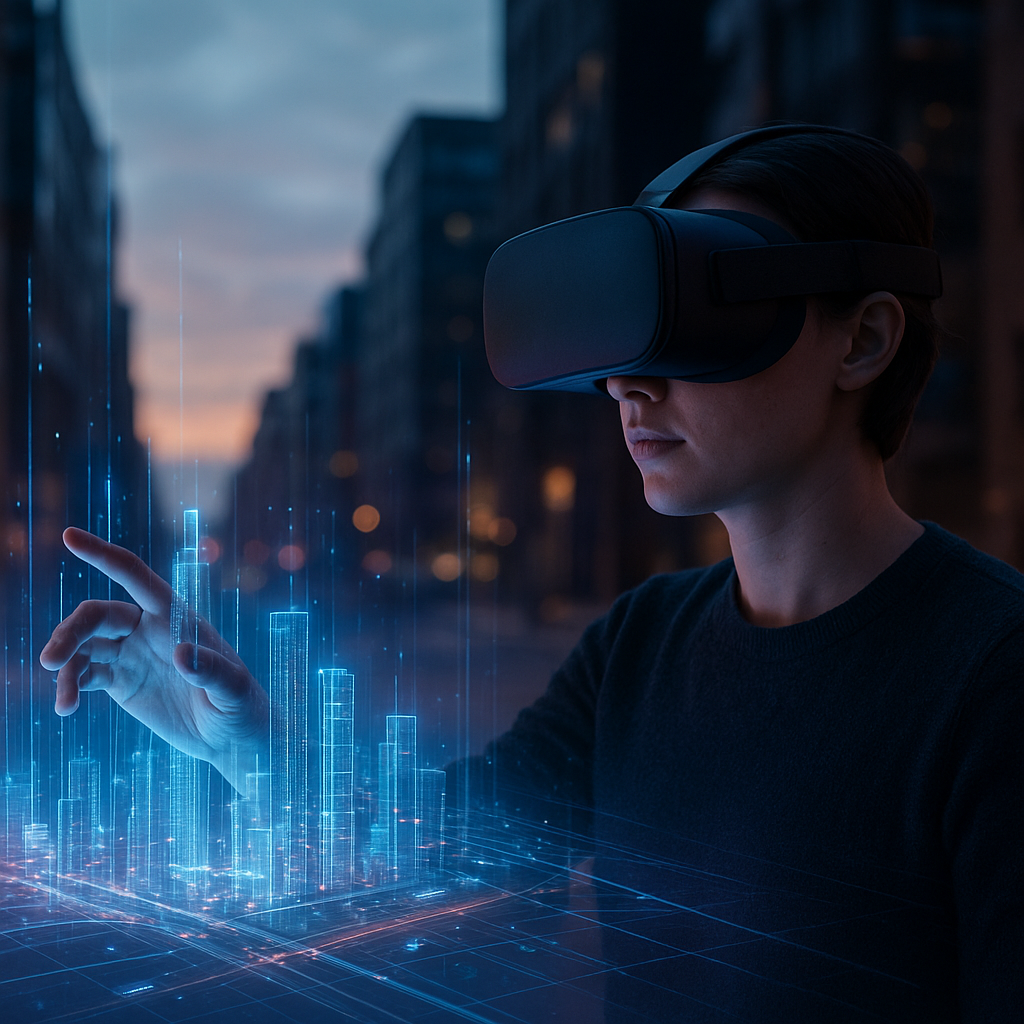
The metaverse isn’t just a buzzword Silicon Valley executives throw around at conferences anymore. It’s quietly becoming one of the most significant technological shifts of our generation — reshaping how people work, socialize, shop, learn, and even receive healthcare. But despite all the noise, many people still aren’t quite sure what the metaverse actually is, let alone how it’s being used in the real world today.
This article breaks down the metaverse in plain language, explores its most compelling real-world applications, and looks at what the data actually tells us about where this technology is heading. Whether you’re a curious newcomer or someone trying to stay ahead of the curve, here’s what you genuinely need to know.
What Is the Metaverse, Really?
The term “metaverse” was coined by author Neal Stephenson in his 1992 science fiction novel Snow Crash, where characters interacted in a shared virtual reality space. Decades later, the concept has evolved from fiction into a loosely defined but rapidly developing technological frontier.
At its core, the metaverse refers to a persistent, interconnected network of 3D virtual environments where people can interact with each other and digital objects in real time. Think of it less like a single platform and more like the internet itself — a broad infrastructure built from many different components and services.
Key technologies that power the metaverse include:
- Virtual Reality (VR): Immersive environments accessed through headsets like the Meta Quest or PlayStation VR.
- Augmented Reality (AR): Digital overlays on the physical world, as seen in apps like Pokémon GO or Microsoft HoloLens.
- Blockchain: Enables digital ownership, NFTs, and decentralized economies within virtual spaces.
- Artificial Intelligence (AI): Powers realistic avatars, virtual assistants, and dynamic environments.
- 5G and Edge Computing: Provides the low-latency, high-speed connectivity needed for seamless real-time experiences.
It’s important to note that the metaverse doesn’t exist as a single, finished product. It’s an evolving ecosystem — and right now, we’re somewhere in the early chapters of its story.
How Big Is the Metaverse Market?
One of the most telling indicators of the metaverse’s potential is the sheer scale of investment pouring into it. According to a report by Grand View Research, the global metaverse market was valued at approximately $65.5 billion in 2022 and is projected to grow at a compound annual growth rate (CAGR) of around 41.6% through 2030. That would place its value well above $1 trillion by the end of the decade.
Meta (formerly Facebook) alone announced plans to invest $10 billion per year into metaverse development through its Reality Labs division. Meanwhile, major companies like Microsoft, Apple, Google, Nvidia, and Roblox are all building pieces of the metaverse puzzle in their own ways.
These aren’t speculative bets from fringe startups. These are some of the world’s largest technology companies betting their futures on immersive, connected digital experiences.
Real-World Applications of the Metaverse
This is where things get genuinely interesting. The metaverse isn’t just about gaming or virtual concerts — though those are part of it. Its real-world applications span industries in ways that are already producing measurable results.
1. Education and Training
One of the most promising applications of metaverse technology is in education. Virtual environments allow students to learn through experience rather than passive absorption of information. Imagine medical students practicing surgery in a risk-free virtual operating room, or history students walking through ancient Rome as it existed 2,000 years ago.
Companies like Prisms VR are already developing math curricula delivered entirely in virtual reality, and early results show significantly improved learning outcomes compared to traditional methods. Meanwhile, platforms like Engage and AltspaceVR have been used to host virtual classrooms and corporate training sessions with participants from across the globe.
For workforce training, the benefits are even more concrete. Walmart has used VR headsets to train over one million employees for high-pressure scenarios like Black Friday rushes — improving both speed and retention of training material.
2. Healthcare and Therapy
Healthcare is another sector being transformed by metaverse technologies. VR is already being used clinically to treat conditions like PTSD, phobias, chronic pain, and anxiety disorders. The FDA has even cleared certain VR-based therapeutics as legitimate medical treatments.

Surgeons are using AR headsets during complex procedures to overlay critical patient data — like blood vessel maps — directly onto their field of vision. Companies like Medivis are pioneering surgical navigation systems that use augmented reality to improve precision and patient outcomes.
Telehealth is also expanding into virtual spaces. Some platforms are experimenting with virtual clinics where patients can meet with doctors via avatars in more immersive environments, potentially reducing the anxiety many people associate with traditional medical appointments.
3. Remote Work and Virtual Collaboration
The COVID-19 pandemic accelerated remote work at an unprecedented pace, but it also exposed its limitations — the lack of spontaneous collaboration, social connection, and shared physical presence. The metaverse offers a compelling solution.
Microsoft’s Mesh platform integrates metaverse-style virtual spaces directly into Microsoft Teams, allowing colleagues to collaborate as avatars in shared 3D environments. Meta’s Horizon Workrooms offers a similar experience for Quest headset users.
The idea isn’t to replace in-person work entirely, but to make remote collaboration feel significantly more human. Early adopters report that virtual meeting spaces reduce “Zoom fatigue” and encourage more natural, spontaneous interaction between team members.
4. Retail and E-Commerce
Retail brands are finding creative ways to leverage the metaverse to enhance the shopping experience. Nike launched “Nikeland” on the Roblox platform, where users can try on virtual sneakers and engage in branded experiences. Gucci sold a virtual bag on Roblox for more than the physical version costs in real life — a remarkable indicator of how digital ownership is evolving.
More practically, AR-powered try-on experiences are already common. IKEA’s Place app lets shoppers visualize furniture in their actual living rooms before buying. Warby Parker and Zenni Optical offer virtual eyeglass try-ons. These applications reduce return rates, improve purchasing confidence, and create genuinely better shopping experiences.
5. Real Estate and Architecture
Virtual real estate has become its own asset class. Platforms like Decentraland and The Sandbox allow users to buy, sell, and develop digital land parcels using cryptocurrency. In 2021, a plot of virtual land in Decentraland sold for approximately $2.4 million.
Beyond virtual land speculation, the metaverse is transforming real-world real estate too. Architects and developers use VR walkthroughs to let clients experience buildings before a single brick is laid. Real estate agencies offer virtual property tours that allow buyers in different countries to explore homes as if they were physically present.
6. Entertainment and Social Connection
Entertainment remains one of the metaverse’s most visible applications. Travis Scott’s virtual concert on Fortnite attracted over 12.3 million concurrent players. Ariana Grande, Marshmello, and other artists have hosted similar events, demonstrating a new model for live entertainment.
Social platforms like VRChat have built entire communities of users who spend significant time socializing, creating content, and attending events together as avatars. For people with social anxiety, mobility limitations, or geographic isolation, these platforms offer genuine human connection that might otherwise be inaccessible.
People Also Ask: Common Questions About the Metaverse
Is the metaverse the same as virtual reality?
No — virtual reality is one technology that can be used to access the metaverse, but the two aren’t synonymous. The metaverse can be experienced through VR headsets, AR glasses, smartphones, or even regular computers. VR is a tool; the metaverse is the broader interconnected space those tools can help you navigate.
Is the metaverse safe?
This is one of the most important and underexplored questions in tech right now. The metaverse raises serious concerns around privacy, data security, identity, and harassment. Because these spaces rely on collecting detailed biometric and behavioral data, the potential for misuse is significant. Regulators are only beginning to grapple with these issues, and most platforms are still developing their safety frameworks. Users — especially parents of younger users — should approach metaverse platforms with informed caution.

Do you need a VR headset to access the metaverse?
Not necessarily. Many metaverse experiences are accessible via traditional screens — platforms like Roblox, Decentraland, and Fortnite are usable without a headset. However, VR headsets do provide significantly more immersive experiences, and as the technology improves and prices drop, headset adoption is expected to grow substantially.
What is the difference between Web3 and the metaverse?
Web3 and the metaverse are related but distinct concepts. Web3 refers to a decentralized model of the internet built on blockchain technology, emphasizing user ownership and control of data. The metaverse refers to immersive, shared virtual spaces. The two concepts overlap significantly — many metaverse platforms use blockchain-based systems for digital ownership — but they’re not interchangeable terms.
Challenges and Limitations to Be Aware Of
The metaverse still faces substantial hurdles before it becomes truly mainstream. Hardware remains expensive and often cumbersome — the average consumer isn’t yet ready to wear a VR headset for hours each day. Interoperability between different metaverse platforms is limited, meaning a digital asset purchased in one virtual world often can’t be used in another.
There are also pressing ethical questions around digital equity. As the metaverse becomes more integrated with work, education, and social life, those without access to the necessary technology risk being left behind in meaningful ways. Ensuring that metaverse development accounts for accessibility and affordability is a challenge the industry has been slow to address.
Environmental impact is another consideration. The energy demands of blockchain networks, large-scale data centers, and high-powered computing infrastructure are significant, and the metaverse will intensify these demands considerably as it scales.
What Does the Future of the Metaverse Look Like?
The metaverse’s future is genuinely difficult to predict, but several trends are worth watching closely. The release of Apple’s Vision Pro headset marked a significant milestone in making spatial computing feel consumer-ready. As AI becomes more sophisticated, virtual environments will become increasingly dynamic and responsive — potentially indistinguishable from physical reality in some contexts.
Industry analysts expect that within the next decade, the metaverse will be deeply integrated into daily life in ways many people currently find difficult to imagine — much like how few people in 1995 could have predicted what the internet would look like by 2010.
The key difference between hype and reality will likely come down to utility. The metaverse applications that survive and thrive will be the ones that solve real problems better than existing alternatives — not those that simply create novelty for its own sake.
Conclusion
The metaverse is neither the overhyped fantasy its critics dismiss it as, nor the all-encompassing digital utopia its most enthusiastic advocates promise. The reality — as is usually the case with transformative technology — is more nuanced and more interesting.
What’s clear is that metaverse technologies are already producing real, measurable value in sectors like healthcare, education, retail, and workplace collaboration. The infrastructure is being built, the investment is flowing, and the user base is growing. The platforms and use cases that define the next decade of the metaverse are likely being developed right now.
Understanding what the metaverse is, how it works, and where it’s already being applied is the first step to engaging with it thoughtfully — whether as a user, a professional, or simply a curious observer of where technology is taking us next.